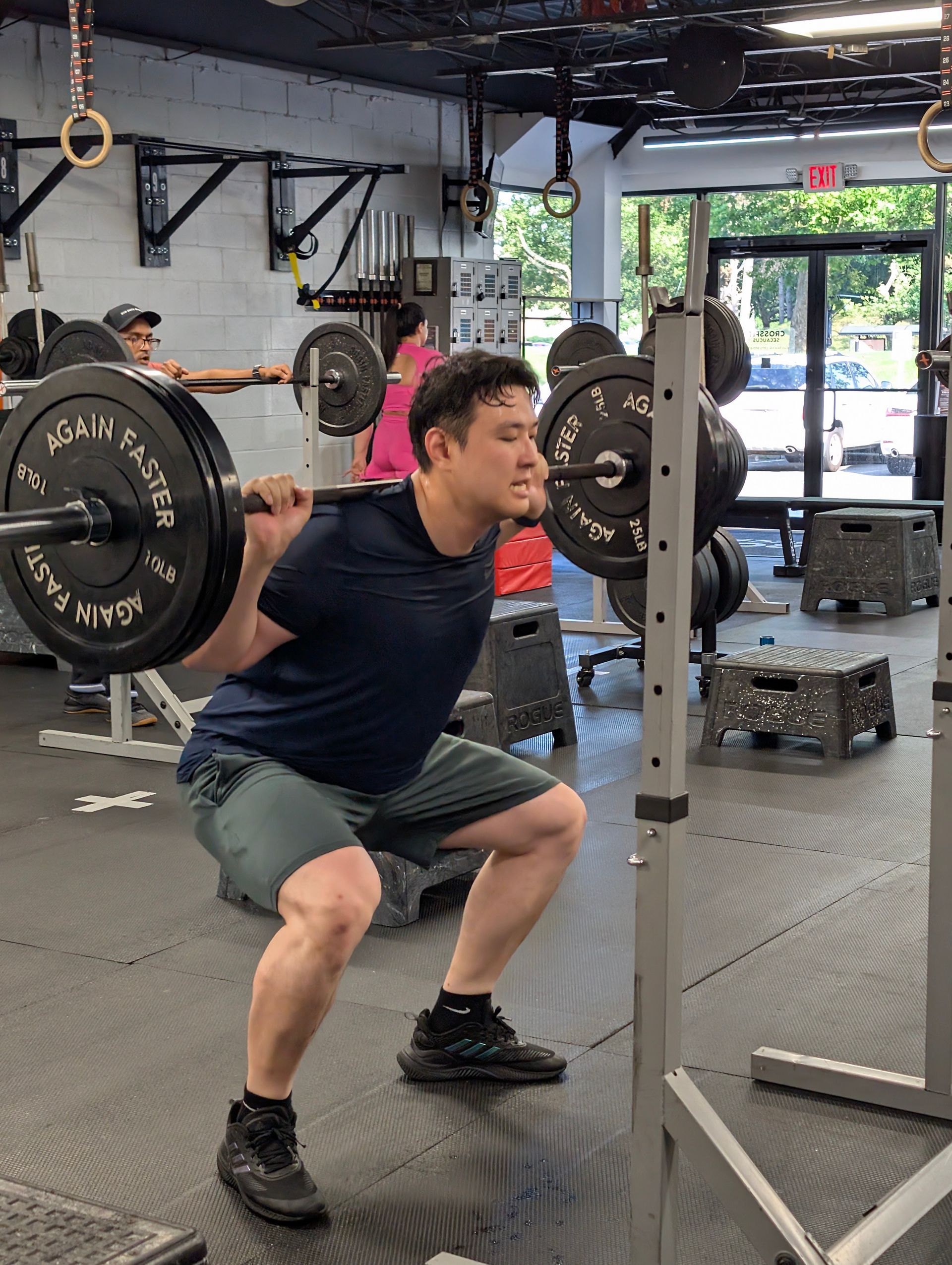
The Real Reason You Keep Quitting the Gym And What Finally Fixed It for Our Members
It is not a willpower problem. It is a structural problem. And structural problems have structural solutions.
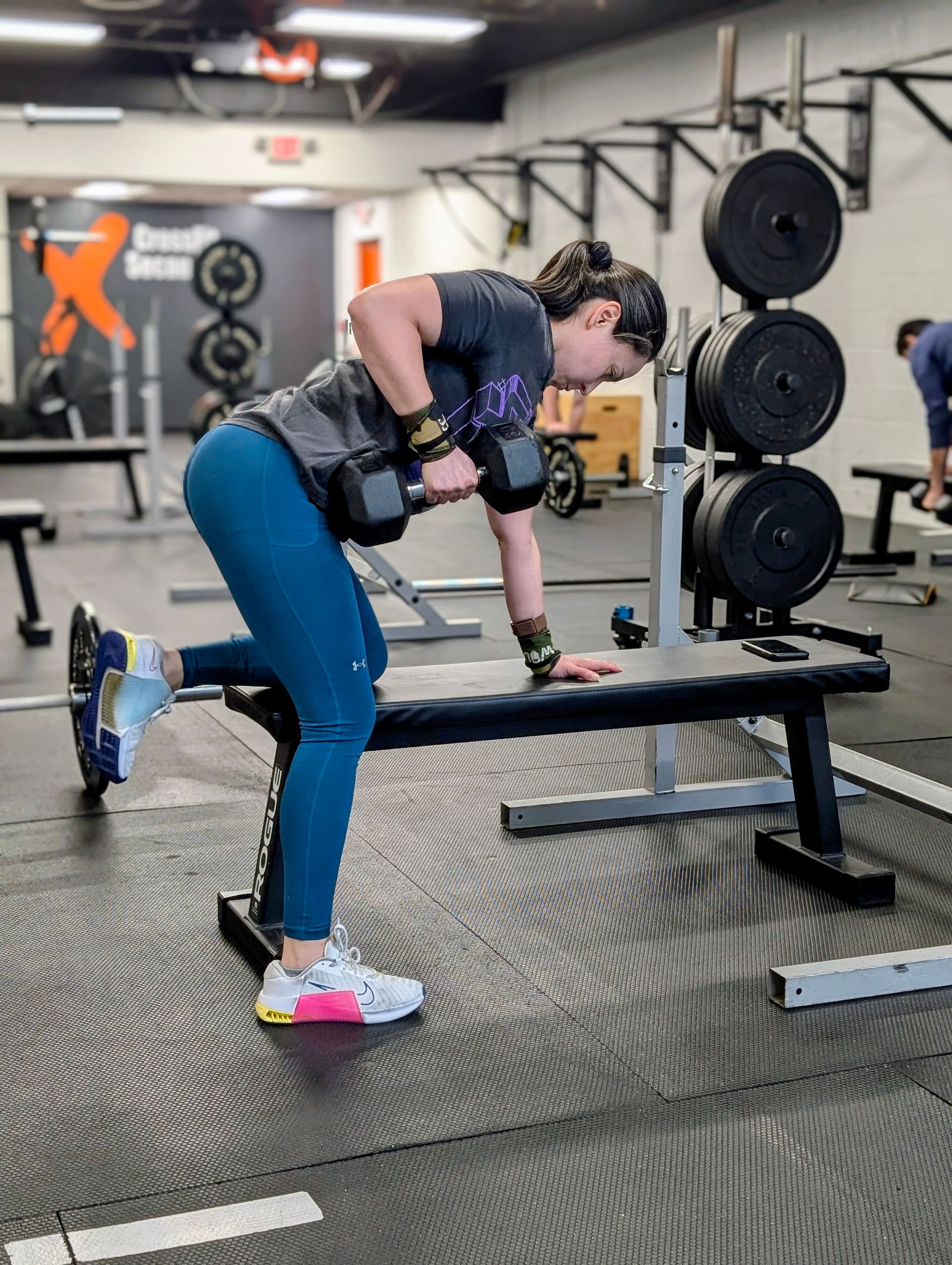
By Rob Zych | CrossFit Secaucus | Secaucus, NJ
At some point in almost every No Sweat Intro I have, the person sitting across from me says something they clearly have not said out loud very often. It comes out quietly, sometimes with a small laugh to soften it, and it usually sounds something like this: I have tried before. A few times actually. And I just cannot seem to make it stick.
Then they wait. I think they are waiting to be told it is a willpower problem. That they need to want it more. That successful people just do not make excuses. That is the message fitness culture has been sending for decades and most people have absorbed it completely. If you keep quitting, the story goes, the problem is you.
I do not believe that. I have never believed it. And after coaching hundreds of adults through this exact experience over the past twelve years, I have become more convinced than ever that the story is wrong.
The people who keep quitting the gym are not lacking discipline. They are not lazy. They are not fundamentally different from the people who stay consistent. What they are is stuck in
environments and systems that were never designed to produce consistency for someone like them. And there is a significant difference between a personal failing and a structural problem.
This blog is about that difference. About what is actually causing the cycle and what breaks it.
Why Willpower Is the Wrong Explanation
The willpower narrative is convenient for the fitness industry because it locates the problem entirely within the individual. If you quit, that is on you. The gym provided the equipment. The program existed. You just did not want it badly enough. This framing is enormously profitable because it means the gym bears no responsibility for your outcome and you keep paying monthly dues whether you show up or not.
It is also largely false.
Willpower is a real thing but it is a depletable resource, not a fixed character trait. Research on decision fatigue has demonstrated consistently that the more decisions a person makes throughout a day, the lower the quality of subsequent decisions becomes. By the time a busy professional in their 40s finishes a full workday, manages family responsibilities, and arrives at the point in their evening where the gym is theoretically on the agenda, their willpower reserves are often genuinely exhausted. This is not weakness. It is biology.
The implication is important. A fitness system that depends on willpower to function will work during periods of low stress and fail during periods of high stress, which is precisely the pattern most people experience. Things are going well, life is manageable, motivation is high and they show up consistently. Then a difficult week at work happens, or a family obligation emerges, or they get sick for a few days, and the whole thing collapses. Not because they stopped caring. Because the system had no structural support underneath the motivation, and motivation alone is not a sufficient foundation for long-term consistency.
The Four Structural Reasons People Actually Quit
In fourteen years of coaching I have watched enough people start and stop to recognize the patterns clearly. The reasons people quit are remarkably consistent and almost none of them are about motivation or discipline. Here is what is actually happening.
Reason One: No Clear Direction
Walking into a commercial gym without a specific program is the fitness equivalent of sitting down to write an important document with no outline, no deadline, and no feedback mechanism. You might produce something. You might not. The absence of structure creates decision fatigue at exactly the moment when you have the least cognitive energy to spare.
Most people who quit commercial gym memberships do not quit because they stopped wanting to be fit. They quit because showing up became an exercise in uncertainty. What should I do today? Is this working? How do I know if I am making progress? Am I doing this correctly? Those questions, repeated every single session, erode the motivation that brought you there in the first place. The gym stops feeling like progress and starts feeling like homework you do not understand.
Reason Two: No Coaching
Movement is a skill. Like any skill it can be learned correctly or incorrectly, and the difference between those two outcomes compounds significantly over time. Someone who learns to squat correctly in the first month of training builds a foundation that supports years of safe, progressive loading. Someone who learns to squat incorrectly builds a foundation of compensations and imbalances that eventually produce pain, injury, or a ceiling on their progress that they cannot explain.
Without a coach, most people do not know which category they are in. They feel fine until they do not. They make progress until they plateau and cannot figure out why. They develop nagging discomforts that make training feel increasingly unpleasant until avoiding the gym starts to feel like the sensible choice. A significant portion of the people who tell me they quit because of an injury sustained that injury not from a single catastrophic event but from months of accumulated poor movement that nobody ever corrected.
Reason Three: No Accountability
This one is underestimated almost universally. Human beings are social creatures and our behavior is profoundly influenced by the expectations of others. When nobody is expecting you to show up, the bar for an acceptable excuse to skip is very low. A long day. Mild fatigue. Something good on television. Any of these is sufficient justification for missing a session when the only person affected by your absence is you.
When people are expecting you, the calculation changes. When your coach knows your name and will notice if you are not there. When the other members of your class have come to recognize you as a regular and will ask where you were. When missing a session means explaining yourself to people you respect, the threshold for an acceptable excuse rises dramatically. Most of the things that derail solo gym-goers are not sufficient to justify missing something you are genuinely accountable to.
This is not about shame or pressure. It is about the simple human reality that commitment made to others holds differently than commitment made only to ourselves. Building fitness into a social structure that creates genuine accountability is one of the most reliable ways to sustain it through the inevitable disruptions of a real life.
Reason Four: The Environment Does Not Match the Person
This is the one people are least likely to name but most likely to feel. Walking into a gym and feeling like you do not belong there is a powerful and persistent demotivator. It does not have to be overt. It can be as subtle as the aesthetic of the space, the implicit culture of who trains there and how, the absence of anyone who looks like you or is at your stage of the journey, or the sense that the coaching and programming were designed for someone considerably further along than you are.
A beginner who walks into an environment that makes them feel out of place will find reasons to stop going. Not because they are fragile or oversensitive but because human beings consistently avoid environments where they feel they do not belong. Finding an environment where the culture, the coaching philosophy, and the community all communicate that you are in the right place regardless of where you are starting from is not a luxury for beginners. It is a prerequisite for consistency.
What Breaking the Cycle Actually Requires
The solution to each of these four structural problems is not more motivation. It is a different environment. Specifically an environment that provides the structure, coaching, accountability, and belonging that the previous environments lacked.
This is not a complicated insight but it has significant practical implications. It means that if you have quit a gym before, the question worth asking is not what was wrong with you but what was wrong with the environment. Was there a clear program or were you figuring it out alone? Was there a coach watching what you were doing or were you essentially unsupervised? Was anyone expecting you to show up or were you entirely self-accountable? Did you feel like you belonged there or like you were tolerated?
If the honest answer to those questions reveals the structural gaps I described above, then quitting was not a failure of character. It was a reasonable response to an environment that was not designed to support you. The right response to that is not trying harder in the same environment. It is finding a different environment.
What Our Members Tell Me Changed Everything
I want to share something I hear consistently from members at CrossFit Secaucus who came to us after years of starting and stopping elsewhere, because I think it illustrates this better than any framework I could construct.
The most common thing is some version of: I finally stopped dreading it. Not that it became easy. CrossFit is not easy and I am not going to tell you it is. But the dread that preceded every gym session in their previous experience, that low-grade anxiety about showing up to an environment where they felt lost or out of place or unsupervised, that went away. They show up now because they want to be there. Because people are expecting them. Because they know exactly what they are doing when they walk through the door. Because the coach knows their name and their history and their limitations. Because the workout is going to be hard but it is going to be appropriate for where they are and they are going to be coached through every rep of it.
The second most common thing is: I wish I had found this years ago. Not because we are magic. Because the structural problems that caused them to quit everywhere else do not exist here. The program is clear. The coaching is present. The accountability is real. The community is genuinely welcoming regardless of where you are starting from. Those four things together create an environment where consistency becomes the path of least resistance rather than a constant act of willpower.
That is what breaks the cycle. Not wanting it more. Finding somewhere that is actually built to support you.
How CrossFit Secaucus Is Built Differently
I want to be specific about what we do because I think specificity is more useful than general claims about being supportive or beginner-friendly.
Every new member goes through four private one-on-one
OnRamp sessions before joining
group classes. This eliminates the uncertainty problem entirely. By the time you walk into your first group class you know every fundamental movement in the program, you understand how to scale, and you have a relationship with your coach. The anxiety of being new has been replaced by the confidence of being prepared.
Every class is coached. I am watching what you are doing, correcting your mechanics in real time, scaling your workout to match your current capacity, and making decisions about your training based on how you are actually performing that day. There is no session where you are on your own trying to figure out what to do next.
The class sizes are deliberately small. This is a choice that affects our revenue and we make it anyway because it is the only way to deliver the coaching attention that produces real results. A coach managing twenty-five people simultaneously cannot see what any individual person is actually doing. I can see what you are doing because there are not twenty-five of you.
The community here is made up almost entirely of people who started exactly where you are. Working professionals, parents, adults in their 30s, 40s and 50s who made a decision about their health and found an environment that supported it. When you miss a session people notice. When you hit a personal record people celebrate it. When you are struggling people encourage you. That is not manufactured. It develops naturally when the coaching is good and the culture is right.
Frequently Asked Questions
Why do I keep quitting the gym even when I really want to change?
Almost always because the
environment is missing one or more of the structural elements that make consistency sustainable: a clear program that removes the guesswork, coaching that keeps you moving correctly and progressing intelligently, accountability that makes showing up feel like a commitment rather than an option, and a community where you feel like you genuinely belong. Most commercial gym environments provide none of these things. When the structure is not there, motivation alone is not sufficient to sustain consistency through the disruptions of a real and busy life. The solution is not more willpower. It is a different environment.
Is CrossFit too intense for someone who has struggled to stay consistent before?
No, and I would actually argue that CrossFit in a well-run gym is specifically well-suited for people who have struggled with consistency elsewhere. The structure is built in. The coaching is present. The community creates natural accountability. Every workout is scaled to your current capacity so there is always an appropriate version of the training regardless of your fitness level. The intensity is real but it is relative to you, not to some external standard you may not be ready for. People who have quit other fitness programs because of overwhelm, injury, or lack of direction consistently find that the structured, coached, community-supported environment at CrossFit Secaucus is fundamentally different from what caused them to quit before.
How is CrossFit Secaucus different from other gyms I have tried?
Four specific things. First, every new member goes through a private onboarding program before joining group classes, which means you are never dropped into an unfamiliar environment without preparation. Second, every class is coached by an experienced coach who knows your name, your history, and your limitations. Third, class sizes are deliberately kept small so that coaching attention is genuine and not diluted across a room of twenty-five people. Fourth, the community is made up primarily of adults who started exactly where you are and who create a culture of genuine support rather than competition or judgment. Together those four things address the structural reasons most people quit most gyms.
What if I have tried CrossFit before and had a bad experience?
This is more common than most people realize and it is worth addressing directly. CrossFit as an industry is inconsistent.
A well-run CrossFit gym with small classes, experienced coaching, a genuine onboarding process, and a culture that prioritizes mechanics and long-term health will produce a completely different experience from a poorly run gym with large classes, minimal coaching attention, and a culture that rewards intensity over safety. If you had a bad experience at another CrossFit gym, the methodology is not necessarily the problem. The specific gym and its coaching culture almost certainly were. The best thing I can offer you is a free conversation where you can ask me directly how we do things and decide for yourself whether it sounds different from what you experienced before.
Ready to Try Something That Is Actually Built to Work?
If you have been in the start and stop cycle for longer than you want to admit, the most useful thing you can do right now is not join another gym. It is have one honest conversation about what has not worked and why, and whether this environment is actually different.
The No Sweat Intro at CrossFit Secaucus is free, takes about thirty minutes, and involves no workout and no commitment of any kind. We sit down, we talk honestly about your history and your goals, and we figure out together whether we are the right fit. If we are not, I will tell you that. If we are, we will talk about what starting looks like.
If you are in Secaucus, North Bergen, Kearny, Jersey City, Hoboken, or anywhere in the Hudson County area and you are ready to find out whether the problem was ever actually you, come in and have the conversation.
Book your free
No Sweat Intro here.
CrossFit Secaucus is located in Secaucus, New Jersey and serves adults throughout Hudson County including Secaucus, North Bergen, Kearny, Jersey City, Hoboken, and the surrounding area. We specialize in beginner-friendly CrossFit coaching, OnRamp programs, and personal training for adults of all ages and fitness levels. Visit us at crossfit-secaucus.com