I Have a Bad Knee, Shoulder, or Back. Can I Still Do CrossFit?
The honest answer depends on your condition, your medical guidance, and whether the coaching is set up to work around your specific limitations.
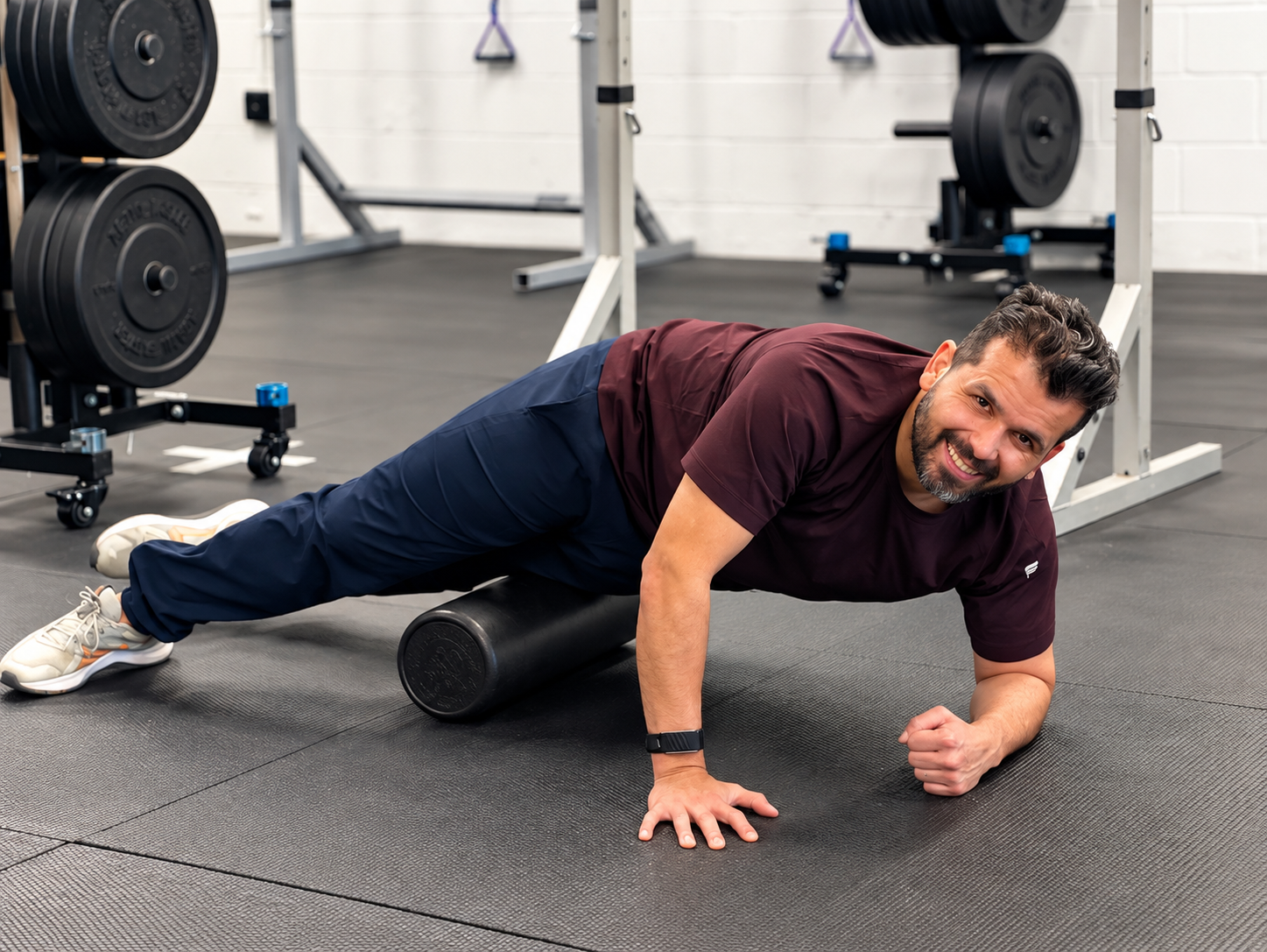
By Rob Zych | CrossFit Secaucus | Secaucus, NJ
The short answer: it depends on your condition, what your doctor or physical therapist has told you, and whether the coaching environment can actually meet you where you are.
If you have been told to avoid exercise entirely, that instruction stands. This article is not a workaround for medical advice. What we can offer is clarity on what happens when you are cleared to train but have a history that makes you hesitant. For example, a knee that has been replaced or operated on, a shoulder with a history of issues, a lower back that has kept you out of the gym for years.
For a lot of people in that situation, the real problem is not that exercise is impossible. The real problem is that most general fitness environments are not set up to ask the right questions before you start; and the cost of that, usually, is pain that confirms what you already feared.
That is the conversation we want to have before you start anything.
The Question We Ask Before We Talk About Anything Else
Before discussing workouts, scaling, or programming, the first thing I want to know is this: what has your doctor or physical therapist actually told you?
Not "have you been cleared to exercise" as a yes or no. What specifically were you told? Are there movements to avoid? Ranges of motion to stay out of? Loads to stay under? Positions that are off the table for now?
This matters because clearance to exercise is not a blanket permission slip. It comes with context, and that context is what shapes how we coach you. A knee that has been cleared for low-impact movement is different from a knee that has been cleared for return to full activity. A shoulder that is post-surgical is different from one with chronic impingement that has been stable for two years. I cannot make those distinctions for you, only your medical provider can. What I can do is work within whatever framework they give us.
If you do not have recent guidance from a medical professional and your limitation is significant, I will typically ask you to get that before we start. That is not a way to avoid a difficult situation. It is how we make sure we are working with you rather than against you.
What Training Around a Limitation Actually Looks Like
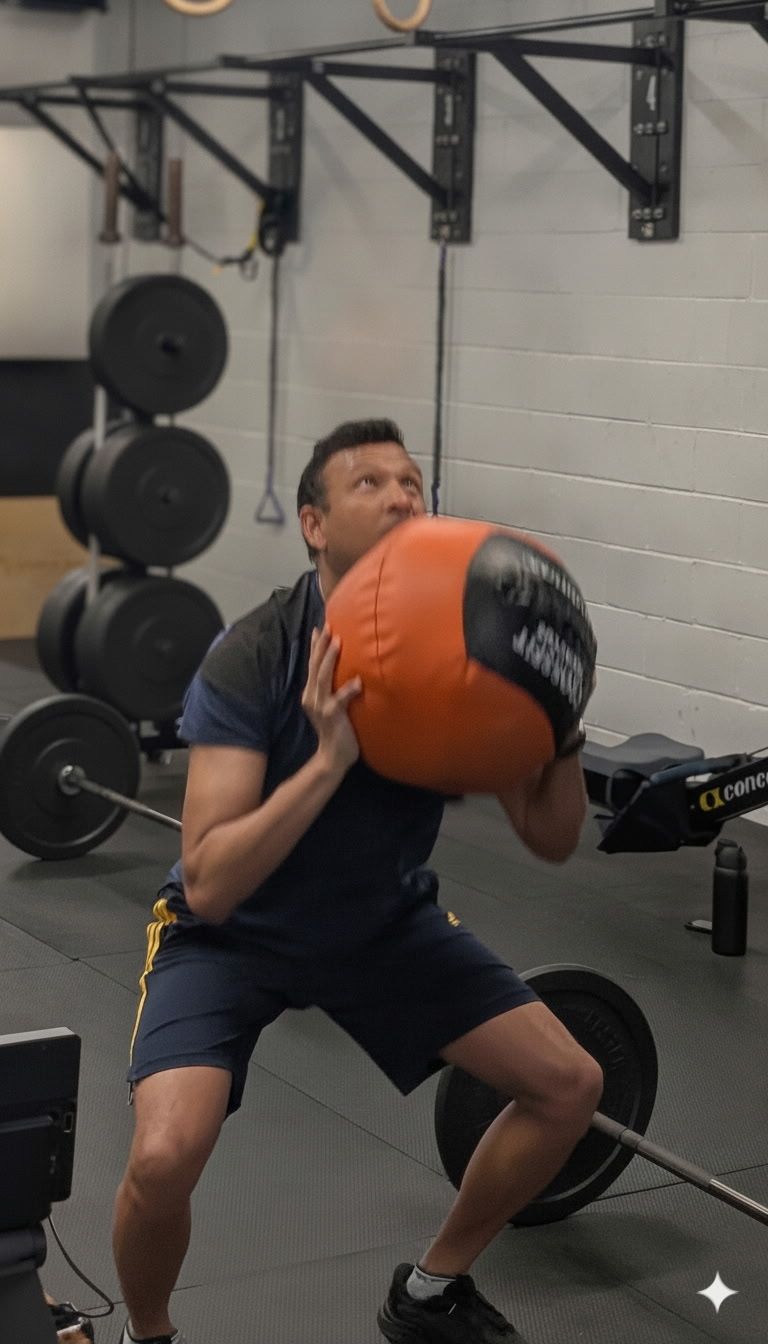
People often imagine that working around a physical limitation means avoiding the gym entirely, or doing a stripped-down version of training that barely qualifies as exercise. That has not been my experience coaching adults in their 40s and 50s for the past fourteen years.
Training around a limitation means making intelligent decisions about load, range of motion, pace, volume, and movement selection. Specifically, adjusting those decisions based on how your body actually responds, not based on what the person next to you is doing. Here is what that looks like for three of the most common situations I encounter.
Bad Knee
Knee concerns vary enormously, and the coaching decisions we make depend on what is actually going on. Someone with a knee replacement who has been cleared to train moves very differently from someone with ongoing patellar tendon irritation. Someone with chronic stiffness and swelling after a partial meniscectomy years ago needs a different approach than someone who has recently completed PT after an ACL repair.
What we can typically adjust: squat depth, the specific squat pattern used, the load on the bar, whether impact is involved, how much time the knee spends in high-demand positions during any given session. Several of our members train consistently following knee surgeries with precise directions. Emphasisizing modification of loads and movement depths that make sense for their specific situation, not at the depths and loads prescribed for someone with a healthy knee.
What we do not do: tell you your knee is fine, encourage you to push through pain, or promise that training will resolve whatever is going on. Pain during training is a signal. We pay attention to it.
Shoulder Issues
The shoulder is one of the most common limitations I see in new members, and also one of the most manageable with good coaching. Overhead pressing, pull-ups, and certain barbell movements are the obvious areas of concern, and there are legitimate alternatives for all of them when overhead work is restricted.
What we can adjust: whether you press overhead at all, what range of motion is used, whether a barbell, kettlebell, or dumbbell better suits your mechanics, which pulling movements are appropriate, and how much shoulder-dominant volume appears in your week. Some members with significant shoulder histories never press overhead in group class. They still train everything else and make meaningful progress.
The important caveat: some shoulder conditions are actively being managed, and the exercises involved in that management may look different from what we would program in a group class. Physical therapy and CrossFit are not mutually exclusive, but they serve different purposes. If you are mid-treatment, a conversation with your PT about what you can and cannot load is more important than what we think looks reasonable from the outside.
Lower Back
Lower back history is the limitation I hear about most often from adults returning to fitness after a long break. And it is also the limitation most often tied to a history of training that did not adequately prioritize mechanics — either because the coaching was not there to catch problems, or because load was pushed faster than technique could support it.
The movements most often associated with lower back irritation in CrossFit including, deadlifts, heavy squats, and certain Olympic lifting positions, are also among the most therapeutic for lower back health when done correctly and at appropriate loads. The dose makes the difference. We start lighter than you think you need to, we watch your mechanics carefully, and we increase load only when the movement quality is there.
What we do not do: assume that because you want to deadlift, your lower back is ready for the deadlift you have in mind. We find the version that challenges you without compromising the pattern. Over time, that version typically gets heavier. But we do not start there.
Where CrossFit Secaucus Fits Into This, And Where It Does Not
I want to be honest about what we are and what we are not.
We are a coaching gym. We program strength and conditioning. We teach movement patterns, watch you execute them, and adjust the load, range of motion, volume, pace based on your capacity and history. We do that well, and we do it with small class sizes so the coaching is actually happening, not just present in the room.
We are not a physical therapy clinic. We do not diagnose, treat, or rehabilitate injuries. If you are in active recovery from something significant, the right environment for that phase is with your physical therapist, not in a group class. Once you are on the other side of that and cleared to train, stable, ready to build strength and conditioning, that is where we come in.
There is also an honest conversation to be had about personal training. For some people returning to training with a complicated history, one-on-one coaching is the better starting point before group classes. It gives us the space to work on your specific limitations without the variable of group class pacing and intensity. If that is the right fit for your situation, I will tell you that directly rather than putting you in a setting that does not serve you.
If you are in the Secaucus, North Bergen, Kearny, or Jersey City area and this sounds like your situation, the place to start is a candid conversation, not a class.
The OnRamp Process for Members With Physical Limitations
Every new member at CrossFit Secaucus goes through our OnRamp program before joining group classes: four one-on-one sessions with me personally. For someone with a physical limitation, this is not a formality.
OnRamp is where we learn your history. Where you have had pain, what has flared in the past, what your medical team has told you, and what you are actually trying to accomplish. It is also where we establish your current baselines. Not where you think you should be, not where you were five years ago, but where you are right now. That gives us something real to build from.
By the time you walk into your first group class, you already know how you are going to scale the movements that require modification. You are not figuring it out under pressure with a group of people around you. You know what you are doing, and so do I.
That foundation changes everything about the experience of starting. It is the difference between walking into a class feeling like you are managing a liability and walking in knowing exactly how you train.
The Honest Answer
Can you do CrossFit with a bad knee, shoulder, or back? For most people who ask me this question, those people who have been cleared to train, who have a stable limitation rather than an acute one, and who are willing to start at the level their body is actually at rather than the level they want to be at, the answer is yes.
Not the CrossFit you see on television, and not necessarily the workout as written on the board. But a version of training that builds real strength, improves your conditioning, and works within the boundaries your body and your medical team have given us. That is achievable. We do it regularly.
The version that does not work: walking into a gym with a significant history, not disclosing it, trying to keep up with what everyone else is doing, and hoping for the best. That version has a predictable outcome. It is not what we do here.
Ready to Have That Conversation?
Our No Sweat Intro is a free, one-on-one conversation. No workout, no sales pitch. We talk about your history, what your medical team has told you, what you are trying to accomplish, and whether CrossFit Secaucus is genuinely the right environment for your situation. If it is not, I will tell you that.
If you are in the Secaucus, North Bergen, Kearny, Jersey City, or surrounding Hudson County area and you have been putting off coming back to training because of a physical limitation, that conversation is worth having.
Schedule Your Free No Sweat Intro Here
Sources: American College of Sports Medicine guidelines on resistance training for older adults; Hospital for Special Surgery (hss.edu) return-to-activity guidance; Google Search Quality Evaluator Guidelines on EEAT for health content.
CrossFit Secaucus | Over 230 five-star Google reviews | Secaucus, New Jersey
Head Coach: Rob Zych, CrossFit Level 2, coaching since 2012 | Assistant Coach: Debbie, CrossFit Level 2
CrossFit Secaucus serves adults throughout Hudson County including Secaucus, North Bergen, Kearny, Jersey City, Hoboken, and the surrounding area. We specialize in beginner-friendly CrossFit coaching, OnRamp programs, and personal training for adults of all ages and fitness levels.