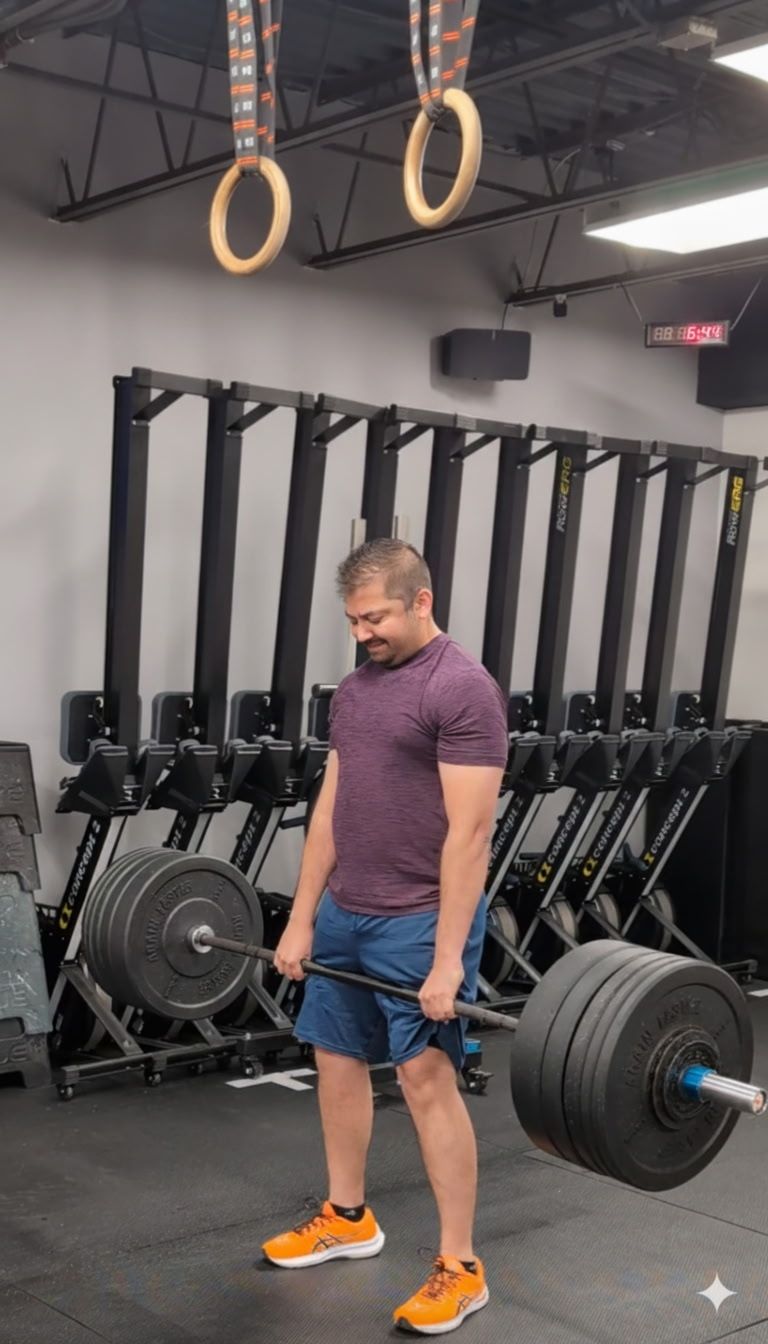
How Men Over 40 in Secaucus NJ Can Get Stronger, Leaner, and More Energetic Without Starting Over From Scratch
What actually changes after 40, why the approach that worked at 25 no longer works now, and what consistently training men in their 40s and 50s actually look like.
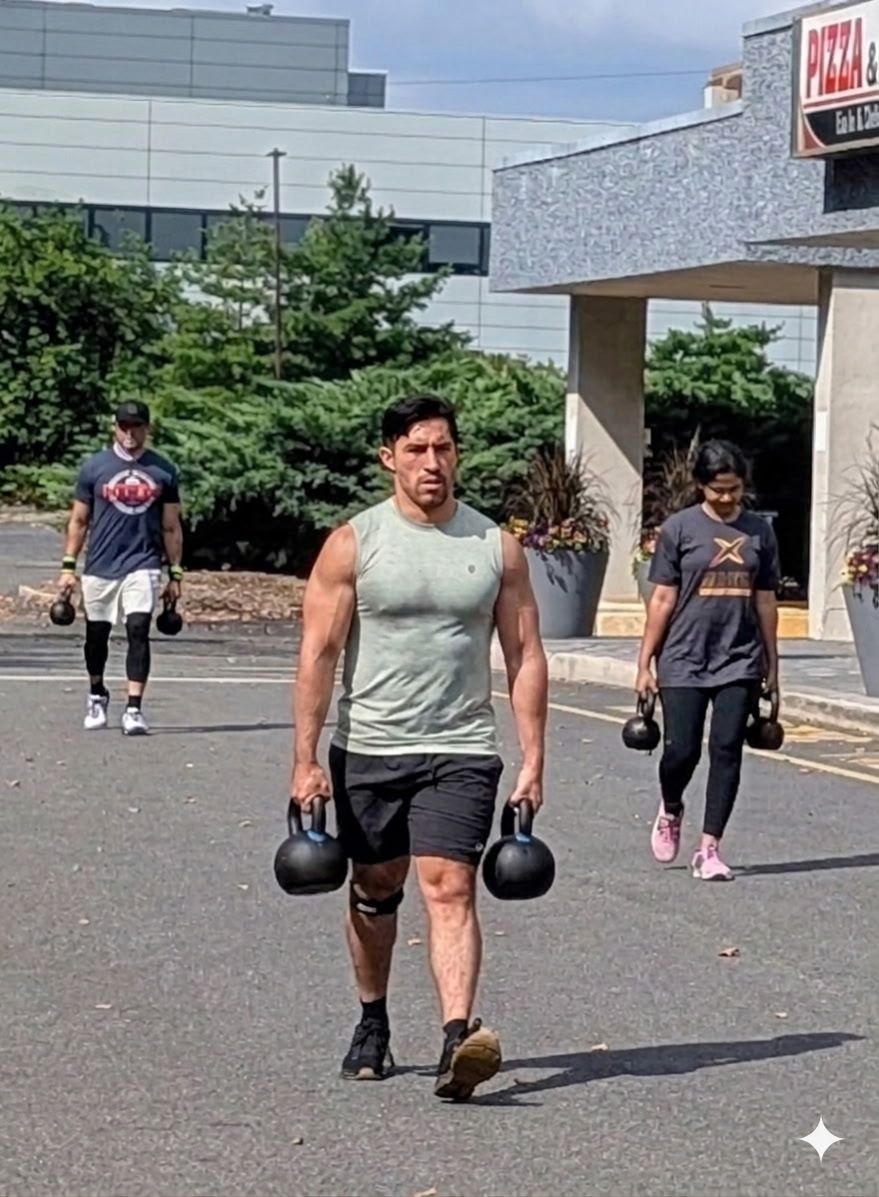
By Rob Zych | CrossFit Secaucus | Secaucus, NJ
Most men do not describe themselves as out of shape. They describe themselves as busy.
There is a specific conversation I have regularly with men in their 40s who come in for a No Sweat Intro. It goes something like this. They used to be athletic. They played a sport in school or college, or they trained seriously in their 20s and early 30s. Then a career happened. Then a family happened. Then the commute to the city got longer, the work hours got harder to control, and the years of saying they would get back to it at some point added up faster than they expected. They are not the type to complain about it. But they are aware of it. The energy they used to have is not quite there. The body they used to live in does not feel like the same one. And somewhere in the back of their mind there is a voice that has been quietly asking how much longer they can let this go before it becomes a problem they cannot reverse.
That voice is right to be asking. And this blog is the honest answer to the question it is raising.
The Thing Most Men Get Wrong About Getting Back in Shape After 40
The most common mistake men make when they decide to do something about their fitness in their 40s is approaching it the same way they approached it at 25. They remember what worked then. The aggressive training schedule, the willingness to push through anything, the body that recovered overnight and responded quickly to almost any stimulus. They assume the same approach applies now with some minor modifications for their schedule.
It does not. And that mismatch between expectation and physiological reality is why most men in this demographic either hurt themselves in the first month, burn out within the first six weeks, or train hard for three months and wonder why the results do not look like what they remember from their 20s.
The body you are working with at 45 is not the same body you had at 25. That is not a limitation. It is simply a fact that changes what the most effective approach looks like. The men who make the best progress after 40 are not the ones who train hardest. They are the ones who train most intelligently given the physiology they actually have right now.
The men who make the best progress after 40 are not the ones who train hardest. They are the ones who train most intelligently given the physiology they actually have right now.
What Is Actually Happening in Your Body After 40
Understanding the physiological changes that occur after 40 is not about accepting decline. It is about understanding what your training needs to address specifically so you are not fighting your own biology.
Testosterone Is Declining Gradually But Meaningfully
Testosterone levels in men begin declining at roughly 1 to 2 percent per year starting in the early 30s. By the time most men reach their mid-40s, the cumulative decline is significant enough to affect muscle protein synthesis, recovery speed, body fat distribution, and energy levels in ways that are noticeable even if they are difficult to attribute to a single cause. This is the primary hormonal driver behind the experience most men in their 40s describe as feeling less like themselves without being able to pinpoint exactly why.
The most effective non-pharmaceutical intervention for supporting healthy testosterone levels in men over 40 is consistent resistance training combined with adequate sleep, appropriate stress management, and sufficient dietary protein and fat. This is not an obscure finding. It is well-established in the research and it is one of the primary reasons why men who train consistently through their 40s and
50s tend to feel and perform significantly better than their sedentary peers of the same age.
Muscle Mass Is Declining Whether You Train or Not
Sarcopenia (the age-related loss of muscle mass) affects men beginning in their mid-30s and accelerates through the 40s and 50s in the absence of resistance training. The rate of loss is roughly 3 to 5 percent per decade, which means a man in his mid-40s who has not been doing meaningful resistance training over the past decade has likely lost a meaningful amount of the muscle mass that once drove his strength, his metabolic rate, and his physical capacity.
This matters for several reasons beyond aesthetics. Muscle mass is directly connected to metabolic rate, which explains why men in their 40s find it harder to maintain
body composition at the same caloric intake they managed easily at 30. It is connected to insulin sensitivity, which affects energy regulation and long-term metabolic health. It is connected to bone density, which becomes increasingly relevant as men age. And it is connected to the functional capacity that determines whether you are the person who can move through your 40s and 50s feeling capable and energetic or the person who starts feeling like their body is becoming a liability.
Recovery Takes Longer and Ignoring That Fact Is Expensive
Recovery capacity genuinely declines with age, and this is one of the most important practical implications for men returning to training after a period away. The training approach that produced results at 28 by pushing hard every day and recovering overnight is not the appropriate approach at 45. Attempting to replicate it produces a reliable outcome: accumulated fatigue, declining performance, increased injury risk, and eventually the kind of setback (a pulled muscle, a joint problem, an overuse injury) that forces a longer break than any planned recovery would have required.
Training intelligently after 40 means programming adequate recovery between sessions, managing total training volume relative to your recovery capacity, and treating rest as a component of the training program rather than a sign of weakness. The men who have been with CrossFit Secaucus for two, three, four years and are the strongest and most capable members of our community are almost universally the ones who learned this lesson early and built their training around it rather than against it.
Why Getting Back in Shape After 40 Is Not Starting Over
I want to address this directly because it is the frame that prevents a lot of men from beginning. The idea that returning to fitness after years away means starting from zero is not accurate, and more importantly it is not the useful way to think about it.
The athletic history you have, however distant it feels right now, is not irrelevant. The movement patterns your body learned at 22 are encoded neurologically in ways that make relearning them faster and more intuitive than learning them for the first time. The competitive instinct that made you push through hard efforts when you were younger is still there and still useful, it just needs to be channeled intelligently rather than indiscriminately. The psychological familiarity with the discomfort of real physical effort, the understanding that hard things are worth doing and that the difficulty is the point, is an asset that someone with no athletic history does not start with.
What you are doing at 40 or 45 is not starting over. It is returning to something with more context, more patience (ideally), and a body that has more potential than you probably currently believe. The men I have watched come through CrossFit Secaucus after a decade or more away from serious training are consistently surprised by how quickly capability returns when the approach is right. The foundation is still there. It needs to be rebuilt, not constructed from nothing.
You are not starting over. You are returning to something with more context, more patience, and a body that has more potential than you currently believe. The foundation is still there.
What the Right Training Program for Men Over 40 Actually Looks Like
The program that produces the best results for men in their 40s and 50s is not the program that produces the fastest initial results. It is the program that produces consistent, compounding results over months and years without the injury and burnout cycle that derails most men who come back at this stage with too much intensity and not enough patience.
Resistance Training Is the Foundation
Progressive resistance training (lifting weights with progressively increasing load over time) is the non-negotiable foundation of any effective fitness program for men over 40. It is the primary stimulus for maintaining and building muscle mass, the most effective intervention for supporting healthy testosterone levels, the best tool for improving insulin sensitivity and metabolic health, and the training modality most directly connected to the functional strength that determines how capable you feel moving through daily life.
The specific movements that produce the best results for men in this demographic are the same foundational patterns that CrossFit is built around: the squat, the deadlift, the press, and the pull. These compound multi-joint movements recruit the maximum amount of muscle tissue per movement, produce the strongest hormonal response to training, and develop the functional strength patterns that transfer to everything else you do. Isolation exercises and machine-based training have their place as supplementary work but they are not the foundation of an effective program for a man in his 40s who wants to be meaningfully stronger and more capable.
Cardiovascular Conditioning as a Health Investment
Men over 40 have a significantly elevated risk profile for cardiovascular disease relative to younger men, and consistent cardiovascular conditioning is one of the most effective interventions available for managing that risk. Beyond the cardiovascular health benefits, conditioning work improves work capacity, accelerates recovery between training sessions, supports fat loss in combination with resistance training, and produces the kind of broad, general fitness that makes everything else in life feel more manageable.
The combination of resistance training and cardiovascular conditioning is more effective for body composition and overall health in men over 40 than either modality alone. CrossFit is specifically built around this combination, which is one of the primary reasons it is well-suited to the health and fitness priorities of men in this demographic.
Three Sessions Per Week Done Consistently Beats Everything Else
The training frequency that produces the best long-term results for most men in their 40s and 50s is three coached sessions per week. This provides enough stimulus to drive meaningful adaptation while allowing the recovery time that older athletes genuinely need between sessions. It is also the frequency that most men with demanding professional and family lives can realistically protect over the long term without the schedule collapsing under pressure.
I want to be direct about this because it runs counter to the instinct most men have when they decide to get serious about their fitness. More is not better after 40. Better is better. Three well-coached, intelligently programmed sessions per week done consistently for twelve months will produce more meaningful and lasting results than any aggressive schedule that burns out in two months. The men with the best outcomes at CrossFit Secaucus are almost universally the ones who accepted this and built their training around consistency rather than volume.
Protein Is the Most Underutilized Tool Available to You
Most men over 40 are significantly under-eating protein relative to what their training demands and their physiological needs require. As muscle protein synthesis becomes less efficient with age (a process called anabolic resistance), the amount of dietary protein needed to produce the same muscle-building and muscle-preserving stimulus increases. A man in his mid-40s needs more protein per pound of body weight than he did at 30 to achieve the same effect from his training.
A practical starting target for men over 40 engaged in consistent resistance training is close to their bodyweight in grams of protein per day. For a 185 pound man, that means roughly 185 grams of protein daily. Most men are consuming less than half that amount. Closing that gap, without any other dietary change, produces measurable improvements in body composition, strength, and recovery over a period of months when combined with appropriate training.
The Stakes That Make This Worth Prioritizing
I want to name something that most fitness marketing dances around but that I think deserves to be said directly to men in their 40s, because I believe it is the actual reason this matters.
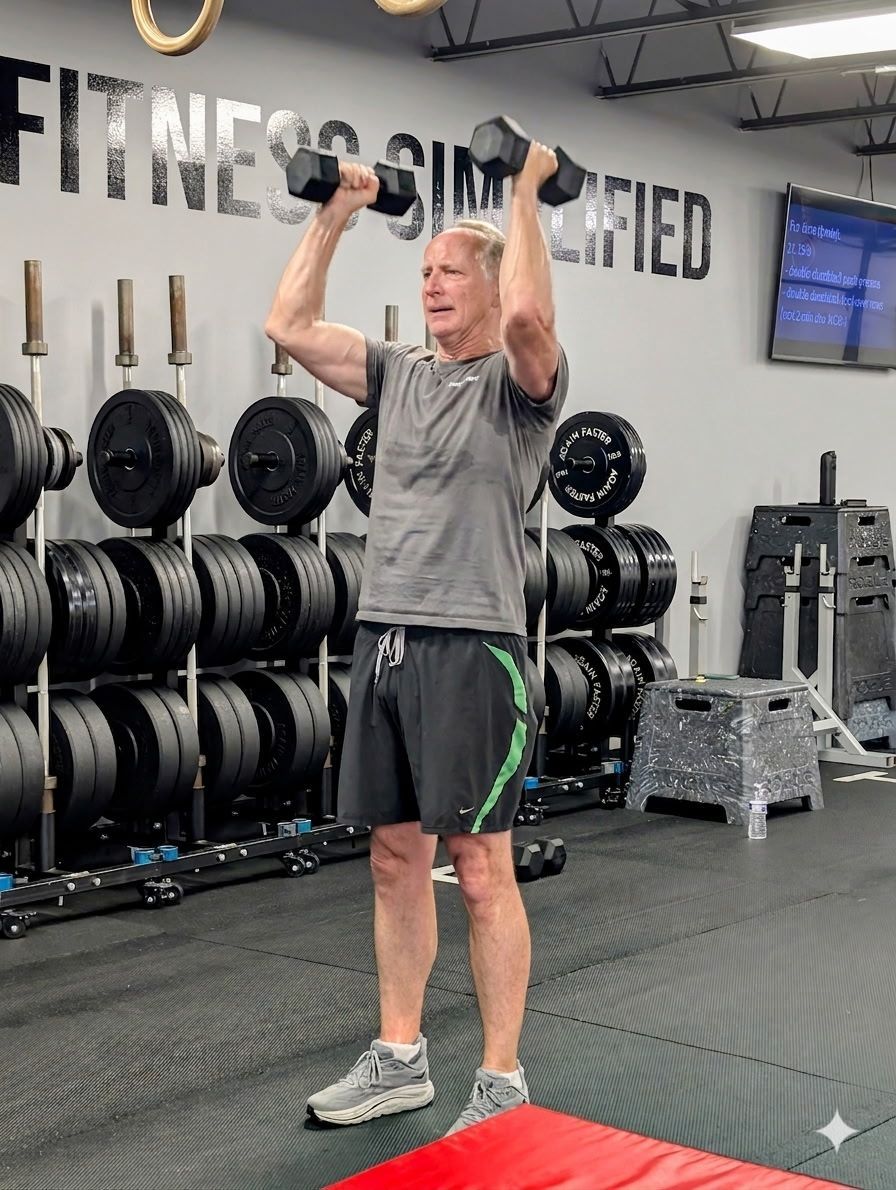
The men I work with who take their fitness seriously are better at everything else that matters to them. They are more energetic fathers. They are more present partners. They manage professional stress with more capacity and less reactivity. They sleep better. They are less likely to develop the chronic conditions that increasingly consume the attention, energy, and resources of men who do not address their health in this decade. And they are more likely to be physically capable and genuinely present for the people who depend on them not just now but fifteen and twenty years from now.
This is not about vanity. It is not about recapturing your 25-year-old body. It is about the simple and compounding return on investment that comes from treating your physical health as a serious priority during the decade when it is most possible to shape the trajectory of the next several decades. The men who do this work in their 40s consistently report that the investment pays dividends in every other area of their lives in ways they did not anticipate when they started.
Dipen, one of our members who has been training with us for four and a half years while running a business in New York City seven days a week and raising two sons, recently told me about showing up to his son's school kickball day fully expecting to struggle. He was the fittest father on the field. His son got to watch that. That is what four and a half years of consistent training actually looks like in a man's life. Not a dramatic physical transformation for its own sake. A quiet, accumulating readiness that shows up when it matters most.
The men who take their fitness seriously in their 40s are better at everything else that matters to them. The investment pays dividends in every other area of their lives in ways they did not anticipate when they started.
What CrossFit Secaucus Offers Men Over 40 Specifically
I want to be specific about what we do rather than making general claims about being supportive and beginner-friendly, because I think specificity is more useful than marketing language.
Every new member goes through four private one-on-one
OnRamp sessions with me personally before joining group classes. For men returning to training after years away, this is particularly valuable. Those four sessions give me the time to assess how you currently move, understand your injury history and any limitations, establish what loading is appropriate for your current capacity, and build the foundation of mechanics and confidence that makes the group class environment productive rather than overwhelming. By the time you join your first group class you know every fundamental movement, you know how to scale appropriately, and you have a working relationship with your coach.
Every class is coached by me directly. I am watching what you are doing, correcting your mechanics in real time, scaling your workout to your current capacity, and making decisions about your training based on how you are actually performing that day. The ego-driven tendency to load more than your mechanics can support is one of the primary injury risks for men returning to training in their 40s, and having a coach present who can push back on that instinct is one of the most valuable things a well-run coaching environment provides.
The class sizes are deliberately small. This is not an incidental feature. It is a deliberate operational decision that affects the quality of coaching attention every member receives. I can see what you are doing and respond to it in real time because there are not twenty-five people in the room competing for my attention simultaneously.
The programming combines strength and conditioning in a varied, structured format designed for long-term health and sustainable progress. The movements are functional, meaning they transfer directly to the strength and capacity you use outside the gym. The intensity is managed to produce adaptation without the accumulated fatigue and injury risk that comes from pushing at maximum intensity every session.
Frequently Asked Questions
Can men over 40 still build muscle and get stronger?
Yes, absolutely. The research on strength development in men over 40 is consistently encouraging. While the hormonal environment is less favorable than it was at 25, men in their 40s, 50s, and beyond who engage in consistent progressive resistance training demonstrate meaningful improvements in muscle mass, strength, and body composition. The process is somewhat slower than it was at a younger age and it requires more attention to recovery and nutrition, but the capacity for adaptation is genuinely present. I have coached men in their late 40s and early 50s who were stronger and in better physical condition at the time of our work together than they had been at any point in their adult lives. Age is a variable that changes what the optimal approach looks like. It is not a ceiling on what is achievable.
How long before a man over 40 starts seeing results from CrossFit?
Most men
notice improvements in energy, sleep quality, and daily physical capacity within the first two to three weeks of consistent training. Early strength improvements (which are primarily neurological in the first month) are often noticeable within the first four to six weeks. Visible changes in body composition typically begin appearing between weeks six and ten for most men, with significant and clearly measurable changes at three months of consistent training. The timeline assumes three coached sessions per week, adequate protein intake, and reasonable sleep and recovery. Men who are also addressing nutrition alongside their training consistently see results faster than those focusing on training alone.
Is CrossFit too intense for men who have been out of the gym for years?
No, in a well-run gym with genuine scaling and an appropriate onboarding process. The intensity of CrossFit is always relative to the individual, not to an external standard. A workout that challenges an experienced member at one level of loading and volume challenges a returning athlete at a completely different level, and both experiences are equally appropriate versions of the same training stimulus. At CrossFit Secaucus the OnRamp process specifically establishes what intensity is appropriate for your current capacity before you ever train in a group setting, which means the transition into group classes is prepared rather than abrupt. The men who have the worst early CrossFit experiences are almost invariably those who were dropped into group classes without preparation at gyms that did not have a real onboarding process.
What is the best workout program for men over 40 in Secaucus NJ?
The program that produces the best results for men over 40 in the Secaucus and Hudson County area combines progressive resistance training and cardiovascular conditioning in a coached, structured format with appropriate scaling for individual capacity and adequate recovery built into the programming. CrossFit Secaucus is specifically designed around those criteria for the adult demographic in this market. Every class is coached, every workout is scaled to the individual, every new member goes through a private onboarding process before joining group classes, and the programming is built for long-term health and sustainability rather than short-term intensity. For men who want to get stronger, leaner, and more energetic without starting over from scratch, it is the most complete option available in Hudson County.
Ready to Find Out What Is Actually Possible for You Right Now?
If you have been in the category of men who know they need to do something about their fitness and have been waiting for the right moment to start, I would suggest that the right moment is approximately now, and probably has been for a while.
The No Sweat Intro at CrossFit Secaucus is a free, no-commitment, thirty minute conversation where we talk about where you are, what your history looks like, what you are trying to accomplish, and whether CrossFit Secaucus is the right fit for your situation. There is no workout involved and no obligation of any kind. If we are not the right answer for you, I will tell you that honestly and point you somewhere that makes more sense. If we are, we will talk about what getting started looks like in a way that fits your life and your body right now.
If you are in Secaucus, North Bergen, Kearny, Jersey City, Hoboken, or anywhere in the Hudson County area and you are ready to stop being the guy who is going to get back to it at some point, come in and have the conversation.
Book your free
No Sweat Intro here.
CrossFit Secaucus is located at 333 Meadowlands Parkway, Secaucus, New Jersey and serves adults throughout Hudson County including Secaucus, North Bergen, Kearny, Jersey City, Hoboken, Union City, and the surrounding area. We specialize in beginner-friendly CrossFit coaching, OnRamp programs, and personal training for adults of all ages and fitness levels. Visit us at crossfit-secaucus.com