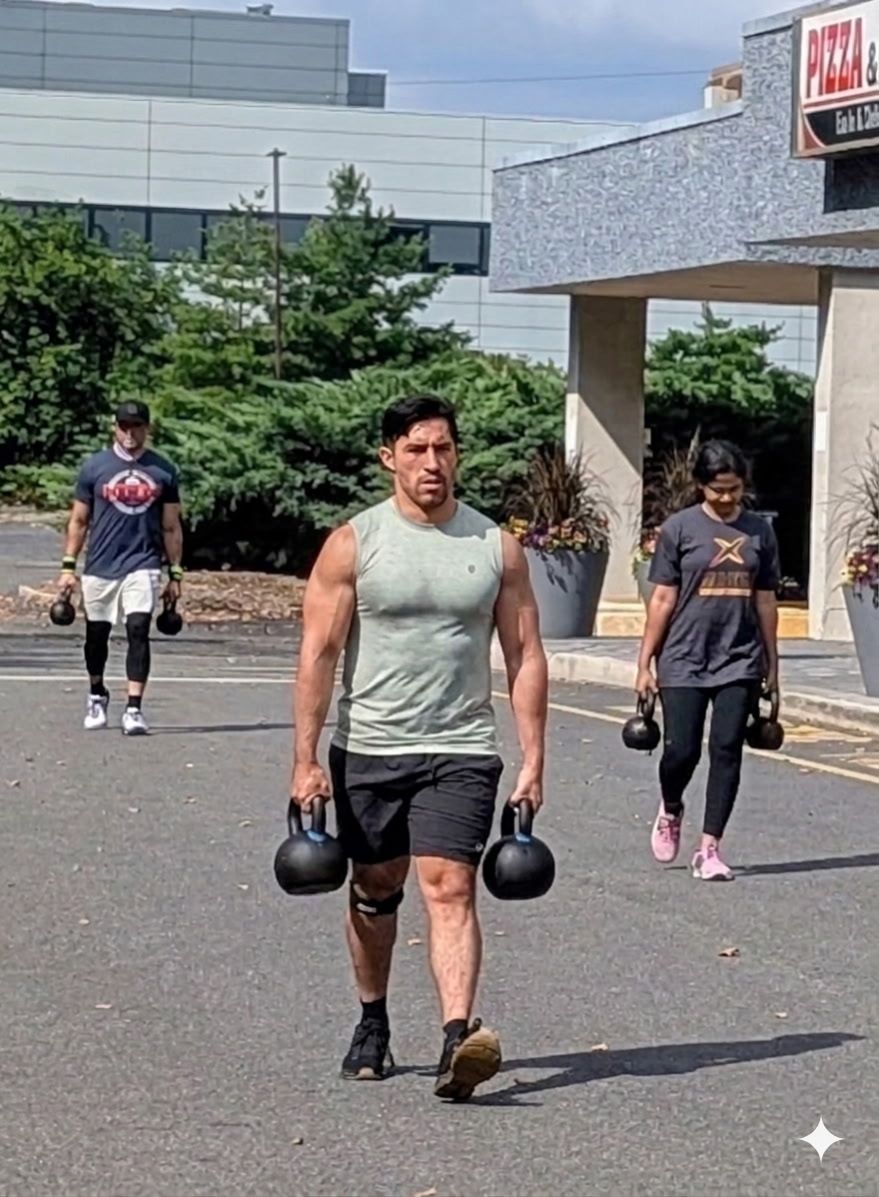
Why Can't I Sleep Anymore? What Strength Training Does About It
Sleep quality often changes after 40. Here is what the research says about strength training and why what I observe in the gym aligns with it.
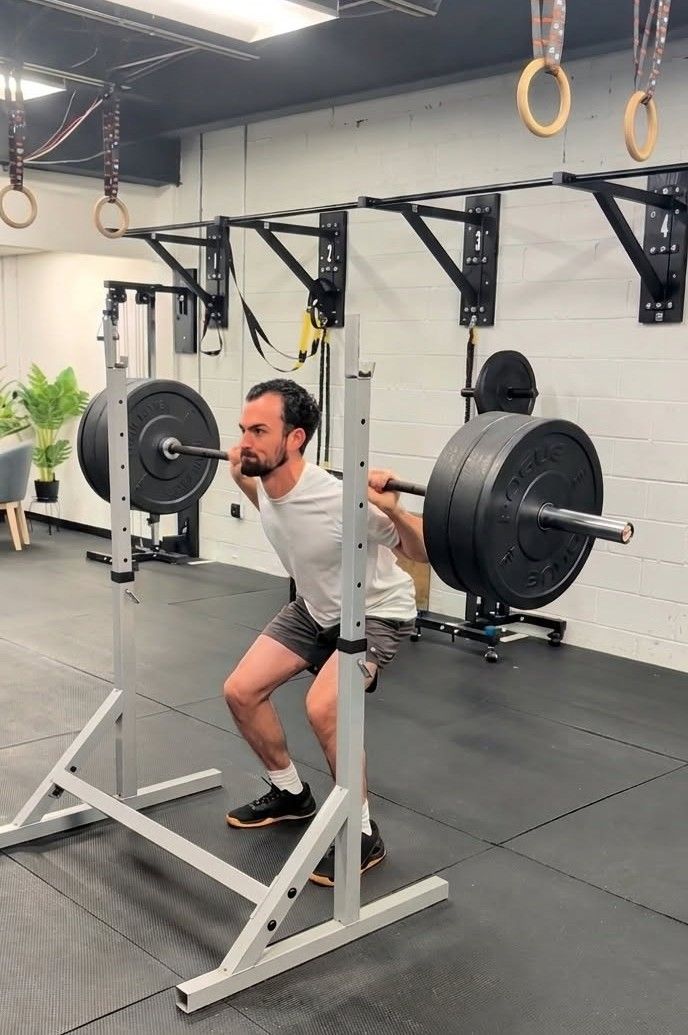
By Rob Zych | CrossFit Level 2 Coach | CrossFit Secaucus | Secaucus, NJ
If you are reading this at 2am or 3am because you woke up and cannot get back to sleep, you are not alone and you are not imagining it. Something did change. The frustrating part is that most of the advice out there (cut the caffeine, keep a consistent bedtime, put your phone down) is reasonable but incomplete. It addresses sleep hygiene. It does not address what is actually happening in your body after 40 that can make sleep harder to find and harder to keep.
This blog is about one piece of the puzzle that most people do not connect to their sleep until they experience it firsthand: structured strength training. Not to the exclusion of everything else. Not as a guarantee. But as a meaningful, often overlooked component of a healthy lifestyle that the research increasingly supports, and that I see making a difference for members in their late 30s, 40s, and 50s consistently enough that I think it is worth writing about directly.
I am not a sleep doctor. What I can tell you is what the research suggests, what I observe coaching adults in this age range every week, and what members have told me when they noticed something shift, often without expecting it.
Something Changed and You Know It
Most adults in their 40s describe a version of the same experience. Sleep used to be simple. You were tired, you went to bed, you woke up. At some point that stopped working. Now you fall asleep fine but wake up at 3am with your mind already running. Or you sleep through the night but wake up exhausted. Or the afternoon hits and you feel like you are moving through water regardless of how much coffee you had.
The people who write this off as stress are sometimes right. But stress is rarely the whole explanation, and treating it as the whole explanation means you keep managing your stress while the underlying physiology keeps working against you.
What changes in your 40s involves a combination of factors: hormonal shifts (in both men and women), natural changes in how your sleep is structured across the night, and a decrease in the kind of physical demand that historically would have given your body something real to recover from. That last factor is where exercise comes in.
What Actually Happens to Sleep After 40 (This Is Not in Your Head)
Sleep has stages. The stages that matter most for physical recovery and for the feeling of actually having rested are the deeper ones, sometimes called slow-wave sleep or N3 sleep. Research suggests that as we age, the proportion of time we spend in deeper sleep stages tends to decrease naturally, which can mean lighter, more easily interrupted nights.
At the same time, the hormonal landscape shifts. Cortisol, your primary stress and alertness hormone, follows a daily rhythm that ideally runs low at night and higher in the morning to support waking. Stress, aging, sleep habits, and physical activity levels can all interact to affect that rhythm in complex ways. There is no single pattern that explains most sleep problems in adults over 40, but disrupted rest and hormonal changes are real contributors that multiple lifestyle factors, including exercise, can help support.
For women approaching perimenopause, declining estrogen and progesterone add another layer. Both hormones interact with sleep architecture. As they shift, sleep can become lighter, more fragmented, and more easily disrupted. This is one reason the perimenopause conversation and the sleep conversation are inseparable for many women in this age range. (Coach Debbie has written about this from firsthand experience. That blog is worth reading if this is where you are.)
None of this is your imagination. And the research suggests that the right kind of physical training can be a meaningful part of addressing it.
Why Strength Training Deserves a Place Alongside Cardio
The standard advice for people who want to sleep better is to exercise more. That advice is true, and it is well supported. Both aerobic exercise and resistance training have evidence behind them when it comes to sleep quality. If you go from doing nothing to doing something consistently, almost any movement tends to help.
What is less often discussed is that strength training specifically has emerged in the research as a particularly meaningful contributor for adults dealing with sleep difficulties. A 2025 systematic review and network meta-analysis published in Family Medicine and Community Health (Bahalayothin et al.) examined 24 randomized controlled trials involving adults with insomnia. The analysis found that resistance exercise showed the strongest improvement in sleep quality scores among the exercise types studied, ahead of aerobic exercise alone and combination training. The researchers noted that most individual exercise types had limited trial numbers, which means these findings should be interpreted with appropriate caution, but the direction of the evidence is consistent with what a growing body of research has been suggesting.
I am not suggesting you stop walking, cycling, or doing whatever aerobic activity you enjoy. I do both, and so do most of our members. The argument here is not that cardio is wrong. The argument is that if strength training is not part of your routine, you may be leaving a meaningful tool off the table.
What Strength Training Does to Sleep
The research on resistance training and sleep points to several mechanisms that are relevant to adults in their 40s and 50s, though it is worth noting that study designs vary and individual responses differ. Here is what the evidence reasonably supports.
First, regular resistance training is associated with improvements in overall sleep quality, including how restorative sleep feels and how difficult it is to fall and stay asleep. Some studies have looked at changes in specific sleep stages (including slow-wave sleep), and while findings on that specific question are mixed, the subjective sleep quality improvements are more consistently reported across trials.
Second, strength training is one of the most well-established lifestyle interventions for improving insulin sensitivity in adults over 40. A 2021 meta-analysis published in the Journal of Exercise Science and Fitness (Li et al.) found meaningful improvements in insulin sensitivity markers in older adults following resistance training programs. Better metabolic health is associated with better sleep in a general sense, though the specific causal links between insulin sensitivity and nighttime waking are not fully established for the general population.
Third, resistance training has solid evidence supporting improvements in anxiety and mood. The anxiety reduction effect matters for sleep because anxiety and mental activation are among the most common reasons adults in this age range wake at 3am and cannot return to sleep. Exercise is not a substitute for professional mental health support when that is what someone needs, but its contribution to emotional regulation and stress resilience is real and well documented.
What ties these together is a simple principle. Your body sleeps better when it has something genuine to recover from, and when the overall system (metabolic, hormonal, psychological) is functioning well. Structured strength training contributes to all of those.
What I Hear From Members Who Did Not Expect This
I coach adults in their late 30s, 40s, and 50s every day. Sleep comes up constantly, and almost never as the reason someone started training. People come in because their doctor said something, because their energy has been low for a year, because their clothes stopped fitting the way they used to, because a friend dragged them in. Sleep is rarely on the original list.
What I hear consistently, a few weeks into training, is some version of this: I do not know what changed but I am sleeping better. I stopped waking up at 3am. My afternoons feel different.
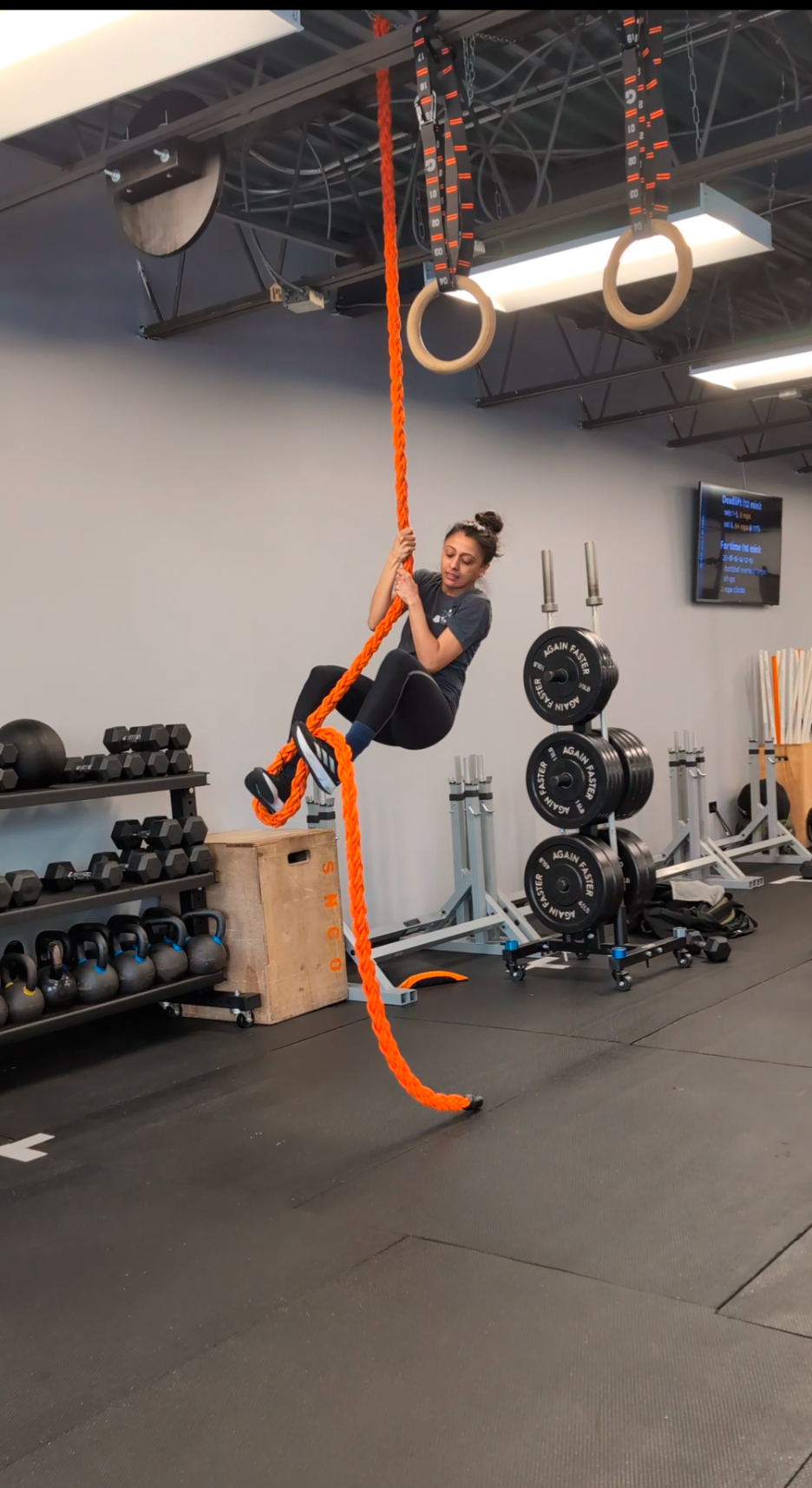
One member, 49 years old, told me just last Saturday that she used to wake up at 3am every night and that her afternoon energy had completely changed since starting to train consistently. She did not come in because of sleep. She mentioned it because she noticed it and it surprised her. I am sharing her experience as exactly that, one person's experience, not clinical proof. But the pattern I hear across members in this age range is consistent enough that it is worth naming.
I am not making a claim that training will fix your sleep. I am telling you what I observe coaching this demographic, and what the research suggests as one plausible explanation for what they are experiencing.
A Few Things Worth Knowing About Timing and Consistency
The relationship between exercise and sleep is not a simple more-is-better equation. A few nuances matter.
Timing is an individual variable. For most people, evening exercise is compatible with healthy sleep. Particularly vigorous training close to bedtime (within an hour or two) may delay sleep onset for some people because of elevated core temperature and alertness that follow an intense workout. But responses vary significantly. If you train in the evening and sleep well, there is no reason to change. If evening training seems to correlate with difficulty falling asleep, shifting your sessions earlier is worth experimenting with.
Recovery balance matters as much as the training itself. Doing too much with too little recovery can degrade sleep quality rather than improve it. The goal is an appropriate stimulus, followed by adequate recovery, repeated consistently. This is one of the reasons structured programming and coaching matter. Random or excessively intense training tends to underperform well-structured training on almost every outcome, sleep included.
Consistency outperforms volume over the long term. Three well-coached sessions a week, done consistently over several weeks, tends to produce more meaningful adaptation than short bursts of high volume followed by breaks. How long it takes to notice changes in sleep will vary by individual. Some members notice something within a few weeks. Others take longer. It is not a prescription with a guaranteed timeline; it is a physiological process that responds to consistent investment.
One More Thing Before You Start
Persistent sleep difficulties can come from many sources. Sleep apnea, menopause-related symptoms, medications, chronic pain, high stress, and other medical conditions all affect sleep, sometimes significantly. If you are experiencing persistent insomnia, loud snoring, gasping during sleep, or significant daytime sleepiness regardless of how long you slept, those are conversations to have with a healthcare provider before assuming exercise alone will address them. Strength training can be a meaningful part of a healthy lifestyle. It is not a substitute for a medical evaluation when one is warranted.
What This Looks Like at CrossFit Secaucus
Every member at CrossFit Secaucus trains in group classes coached personally by me or by Debbie, both CrossFit Level 2 certified. Our programming is designed to provide an appropriate training stimulus at the right frequency, with recovery built into the weekly structure. For new members, our OnRamp program (four private one-on-one sessions before joining group classes) establishes the movement foundation and gives us the information we need to program around your history, your limitations, and your goals.
For members who want more individual attention, personal training is available alongside group classes or as a standalone service. For some adults returning after a long break, or managing a specific physical history, starting one-on-one before joining the group produces a better experience and a safer outcome.
If you are in Secaucus, North Bergen, Kearny, Jersey City, or Hoboken and sleep is part of what is not working right now (even if that is not why you were thinking about coming in), it is worth a conversation.
Ready to Sleep Better?
Our No Sweat Intro is a free, one-on-one conversation with no workout and no commitment. We talk about where you are, what has changed, what you are trying to accomplish, and whether CrossFit Secaucus is genuinely the right fit for your situation. If it is not, I will tell you that.
Schedule your No Sweat Intro here.
Sources:
[1] Bahalayothin P, et al. (2025). A systematic review and network meta-analysis of randomised controlled trials on how different types of physical exercise affect sleep quality in older adults with insomnia. Family Medicine and Community Health. DOI: 10.1136/fmch-2024-003056
[2] Li J, Li J, Lu Y. (2021). Effects of resistance training on insulin sensitivity in the elderly: A meta-analysis of randomized controlled trials. Journal of Exercise Science and Fitness, 19(4), 241-251.
[3] American College of Sports Medicine Position Stand on Physical Activity and Sleep.
[4] National Sleep Foundation. Sleep and Exercise. sleepfoundation.org/physical-activity/sleep-and-exercise.
Rob Zych is a CrossFit Level 2 coach and owner of CrossFit Secaucus in Secaucus, NJ. He has been coaching since 2012. This blog reflects his coaching observations and a review of publicly available research. It is not medical advice. If you are experiencing persistent sleep difficulties, please consult a qualified healthcare provider.
CrossFit Secaucus | 333 Meadowlands Parkway, Secaucus, NJ | crossfit-secaucus.com