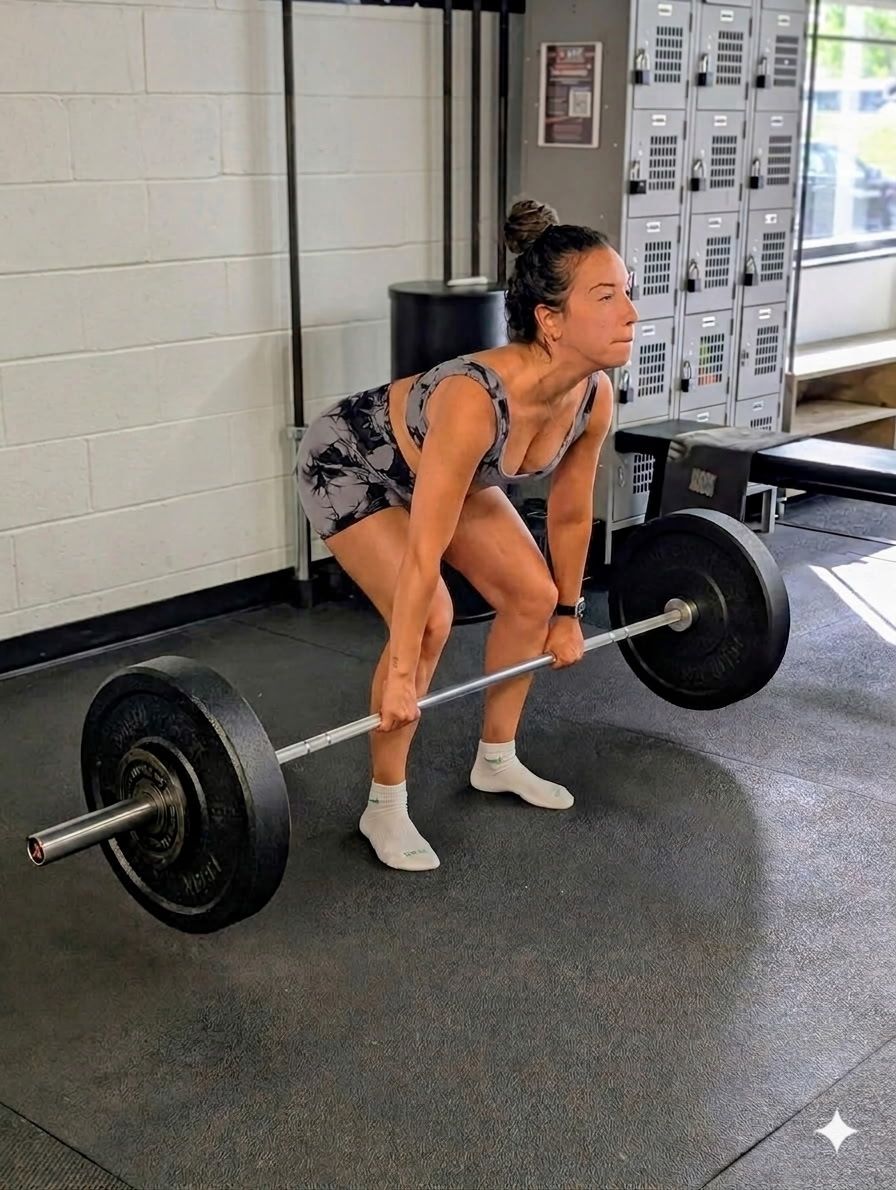
My Doctor Told Me I Need to Start Strength Training. Now What?
You have the directive. Here is what strength training actually looks like for adults in their 40s and 50s (and how to start without wasting time or getting hurt).
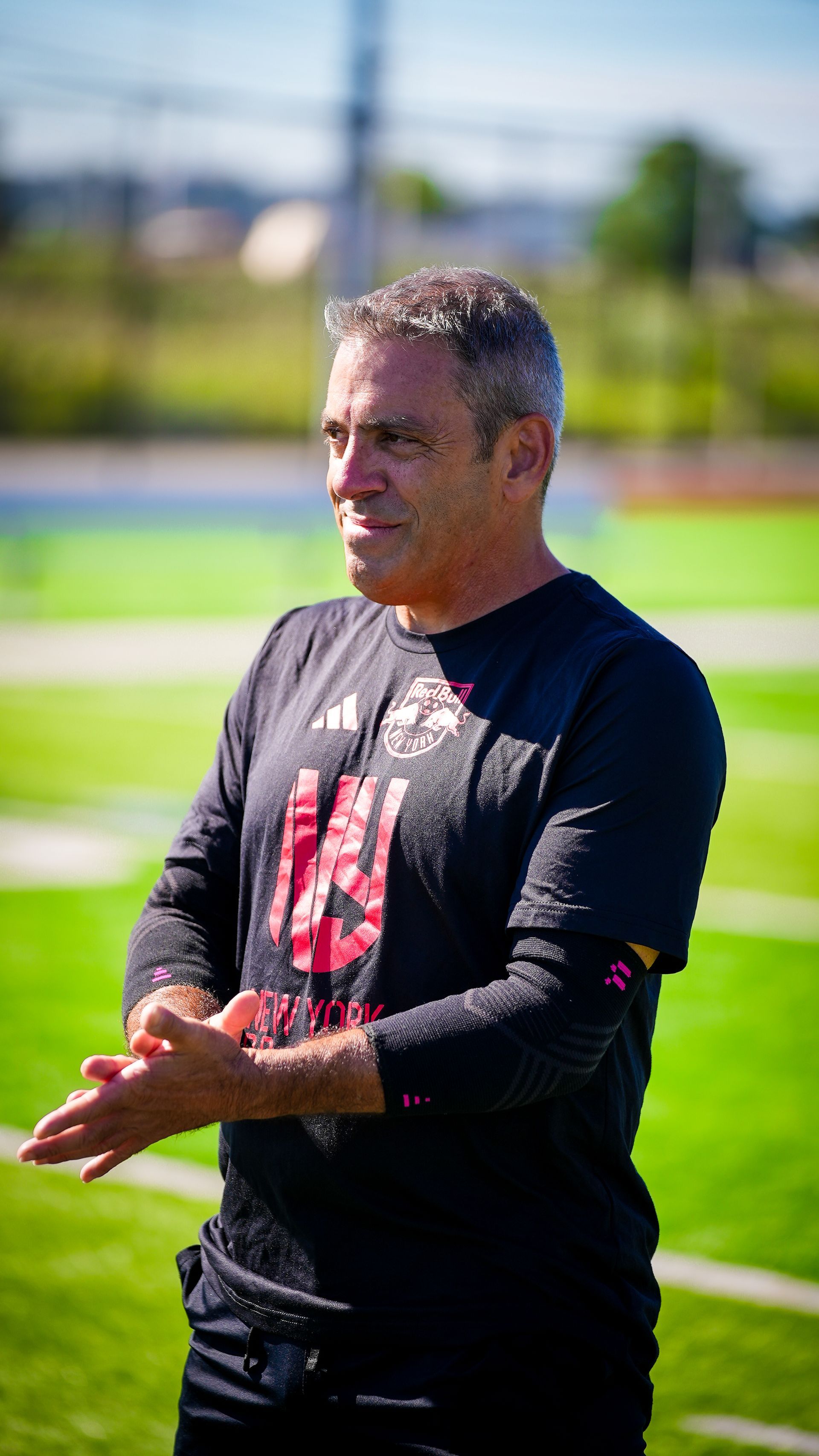
By Rob Zych | CrossFit Secaucus | Secaucus, NJ
You sat across from your doctor, and somewhere during the conversation (maybe about bone density, maybe about weight, maybe about your bloodwork) they said it, "you need to start strength training".
They were not wrong. The research on resistance training for adults over 40 is about as unambiguous as medical research gets. Strength training builds and preserves muscle mass, slows bone density loss, improves insulin sensitivity, supports joint health, and reduces the risk of the kinds of injuries and chronic conditions that erode quality of life as you age.
Your doctor gave you good advice. The question now is what to actually do with it.
This is where most people get stuck. The directive is clear. The path is not. You are not a personal trainer. You do not know which exercises to do, how heavy to lift, how often to train, or where to even start. And the last thing you want is to walk into a gym, try something you are not sure about, hurt yourself, and confirm the fear that exercise is not for you.
Let me give you some clarity.
What Your Doctor REALLY Means by Strength Training (And What They Do Not Mean)
When a physician says "start strength training," they mean resistance training that loads your muscles and bones meaningfully enough to create an adaptation response. Bands and light dumbbells can be a starting point, but walking, yoga, and low-resistance cardio — as valuable as those things are — do not provide the stimulus your doctor is talking about.
They mean progressive overload: loading your body in a way that challenges it, recovering, and gradually increasing that challenge over time. That process is what builds the muscle and bone density they are trying to preserve or restore.
What they do not mean is that you need to become a powerlifter, train six days a week, or walk into a gym and immediately lift heavy things. "Appropriate" is a word that matters here. The right load is the one your body is ready for right now, not the one you will be ready for in a year, and not the one the person next to you is using.
Who Gets This Conversation With Their Doctor
Strength training recommendations come up in a lot of different clinical contexts. Here is what I hear most often from the people who walk through our door.
Women Approaching Perimenopause
Estrogen plays a significant role in maintaining bone density and muscle mass. As estrogen levels decline through perimenopause and menopause, both begin to decrease at an accelerated rate. The window to build a strong structural foundation, before that decline picks up speed, is now.
Most of the women I coach in this stage are not interested in a bodybuilding program. They want to feel strong, stay capable, and not end up fragile in their 60s and 70s. That is exactly what consistent, well-coached strength training delivers. And it does not require training every day or spending two hours in the gym. Three well-structured sessions per week, done consistently, moves the needle.
Women With Early Bone Density Loss
If your DEXA scan came back showing osteopenia (early bone density loss), then your doctor's recommendation is not casual advice. It is a clinical directive with a time component.
Bone responds to mechanical loading. When you put appropriate stress on your skeleton through resistance training, your body responds by building density. This is one of the most well-documented effects of strength training in older adults, and it is one of the primary reasons a physician will specifically recommend weights over other forms of exercise. Walking does not load the skeleton the way resistance training does. Cycling does not either. The prescription is specific because the mechanism is specific.
If a physical limitation is part of the picture, for example, a bad knee, a shoulder history, then we have covered how we work around that in a separate post. The limitation does not have to be the reason you do not start.
Runners Who Want to Stay Running
This one surprises some people. If you already run, why would your doctor or sports medicine provider be pushing strength training?
Because running is repetitive single-leg loading, and when the muscles surrounding your hips, knees, and ankles are not strong enough to absorb that load efficiently, your joints and connective tissue absorb it instead. Most running injuries are not random bad luck. They are the predictable outcome of repetitive stress on a structure that does not have enough muscular support around it.
Strength training (squats, deadlifts, single-leg work, hip hinging) builds the support structure that keeps runners running. It also tends to improve running economy, which means you run faster for the same effort. The runners who add two strength sessions per week consistently do not become "too bulky to run."
They become harder to injure and faster over time.
Men Who Want to Feel Like Themselves Again
Testosterone decline in men begins in the mid-30s and continues gradually through the 40s and 50s. The symptoms of decreased energy, reduced muscle mass, increased body fat, and/or lower motivation, tend to accumulate slowly enough that many men attribute them to just getting older rather than to a specific physiological shift.
Strength training is one of the most effective non-pharmaceutical interventions for this picture. It does not replace whatever clinical path your doctor may recommend, but the evidence that resistance training supports testosterone production, improves body composition, and increases energy is consistent. Men who train with (appropriate) intensity generally feel significantly better within a few months of starting.
Anyone Who Wants to Tone Up
"Toning" is a word that has gotten a lot of use in fitness marketing, and it has accumulated some confusion along the way. What it actually describes is the combination of building muscle and reducing body fat, both of which happen as a result of consistent strength training paired with reasonable nutrition. There is no separate "toning" mechanism. You are either building muscle, losing fat, or both.
The concern that comes up most often here is about getting bulky. It is worth addressing directly, because it is one of the most common reasons women in particular hesitate to start lifting.
Building the kind of muscular size that reads as "bulky" is the result of years (often decades) of specific, high-volume training combined with a caloric surplus calibrated for that specific purpose. It does not happen accidentally. It does not happen because you picked up a barbell twice a week. There are athletes who have dedicated their entire adult lives to building a large, muscular physique and have still not achieved what they were aiming for. The outcome you are worried about is not a side effect of normal strength training. It is the goal of a completely different program, pursued with a completely different level of intentionality, over a timeline that is measured in years.
What you will actually get from consistent strength training: a body that looks and moves better, a metabolism that functions more efficiently, and a level of physical capability that most people do not associate with their 40s and 50s.
Why CrossFit Is One of the Best Answers to This Directive
CrossFit, done correctly, is a strength and conditioning program. The strength component (barbell work, kettlebell training, gymnastic movements) is specifically designed to build the functional strength your doctor is talking about. The conditioning component supports cardiovascular health and metabolic function simultaneously.
The reason this matters is efficiency. If your doctor told you to strength train, you probably do not want to become a person whose entire identity is organized around the gym. You want to get the work done, get the results, and get on with the rest of your life. A well-run CrossFit class accomplishes that in 45 minutes, three to four days per week.
The other reason is coaching. Strength training done incorrectly (with poor mechanics, inappropriate loads, or insufficient recovery) produces injuries, not results. The same movements that strengthen your lower back when done well can aggravate it when done poorly. A coach who watches your movement, adjusts your load, and corrects your mechanics before problems develop is not a luxury. For adults in their 40s and 50s who are starting from scratch or returning after years away, it is the difference between a program that works and one that does not.
If you are in the Secaucus, North Bergen, Kearny, or Jersey City area and your doctor has given you this directive, this is worth a conversation.
What Strength Training Looks Like at CrossFit Secaucus
Our programming is built around adults who want to get meaningfully stronger and improve their conditioning without their training becoming a second job.
Most sessions are 45 minutes. The structure is consistent: a warm-up that prepares the specific joints and muscles you will be using, a strength or skill segment, and a conditioning piece that typically runs eight to sixteen minutes.
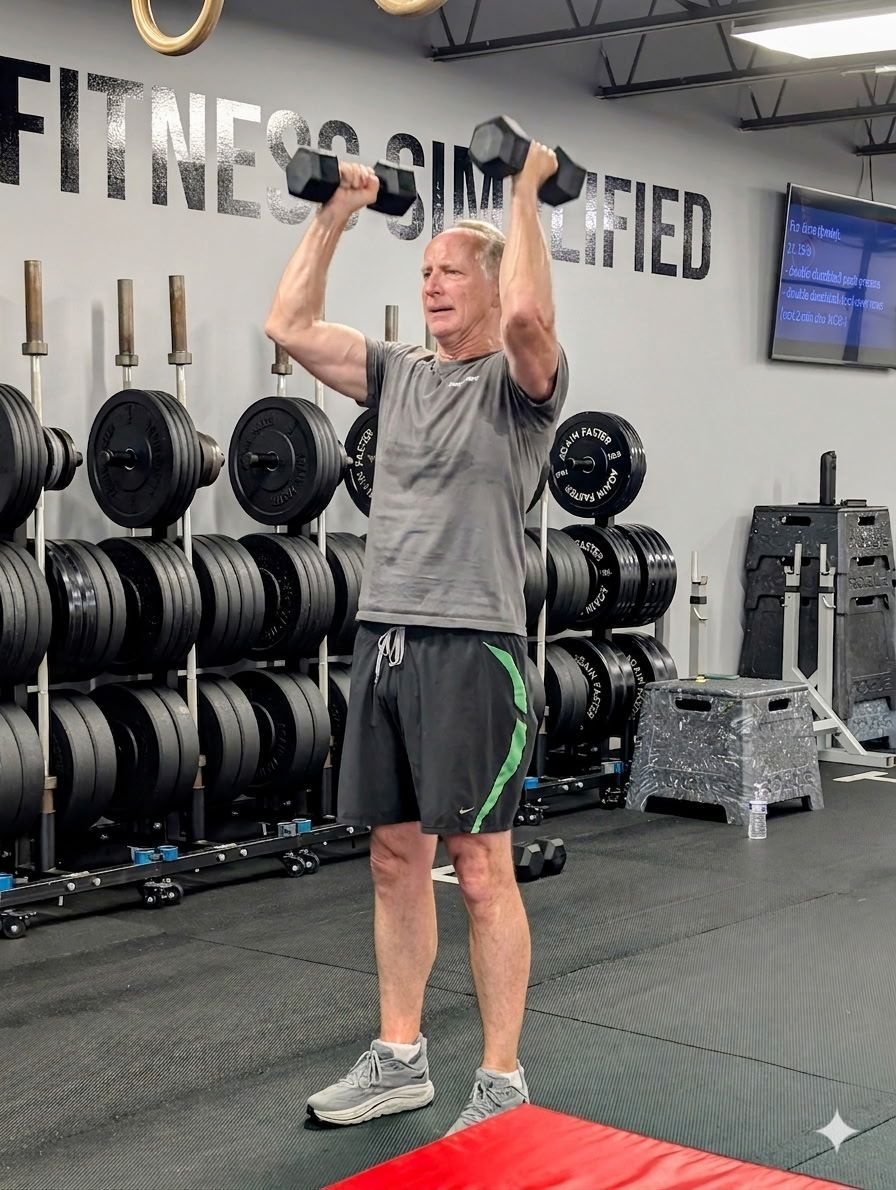
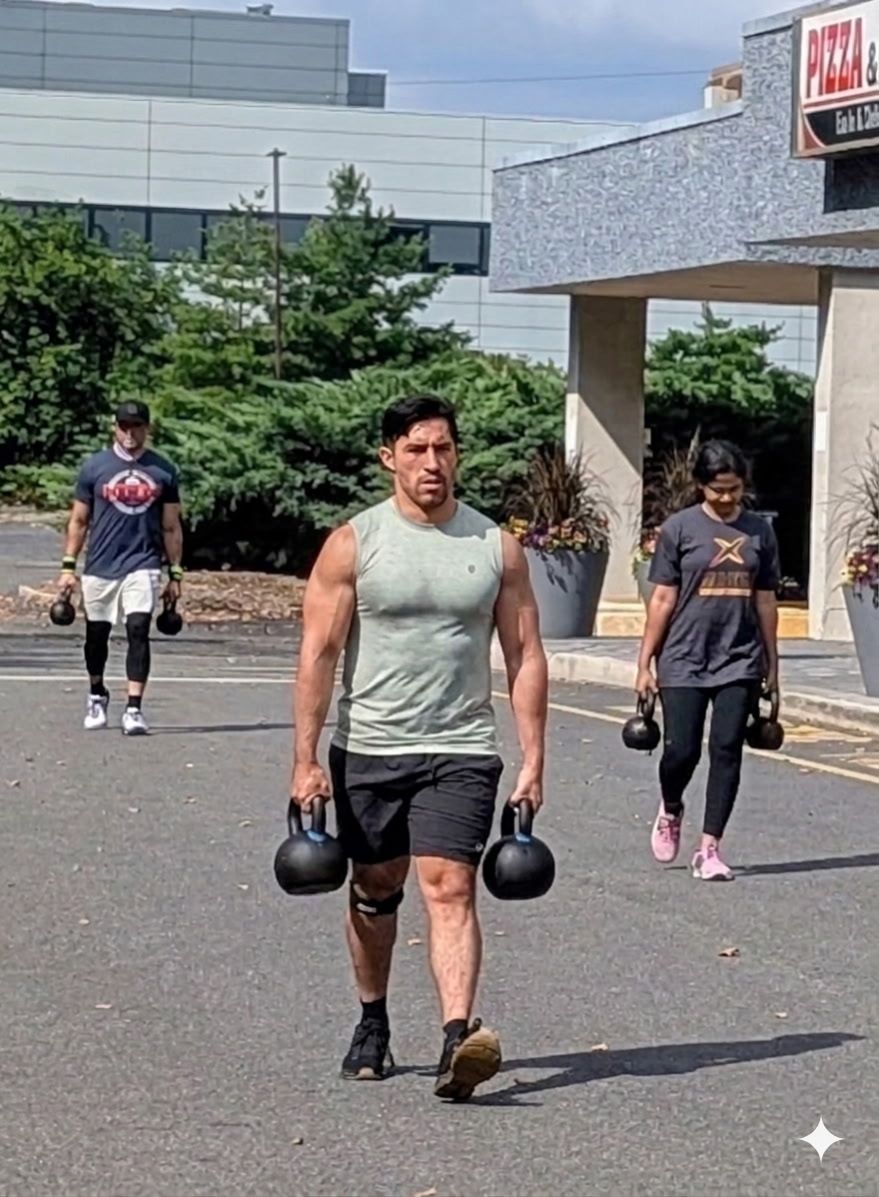
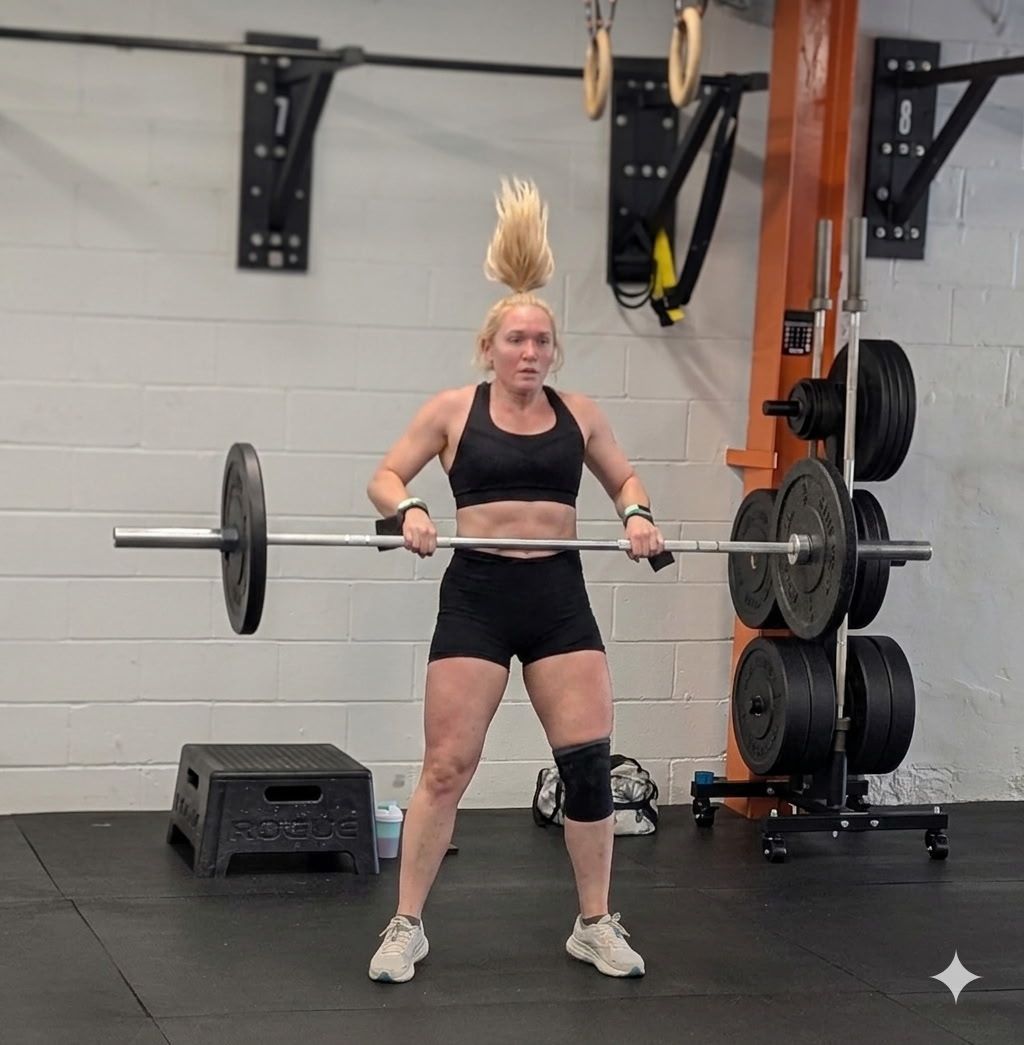
The strength segment is where your doctor's directive gets fulfilled. We deadlift, front squat, press, row, and carry — fundamental movement patterns that load your muscles and skeleton in the ways that produce the adaptations your doctor is looking for. We do this with barbells, kettlebells, and dumbbells, scaled to what your body is actually ready for right now.
Before you ever join a group class, you go through our OnRamp program: four one-on-one sessions with me personally. That is where we establish your baselines, learn your history, and make sure that when you walk into your first group class, you already know exactly what you are doing and how to scale every movement to your current capacity.
You do not need to walk in knowing anything. You just need to show up.
Ready to Start?
Our No Sweat Intro is a free, one-on-one conversation — no workout, no commitment, no sales pressure. We talk about what your doctor told you, where you are starting from, and whether CrossFit Secaucus is the right environment to act on that directive. If it is not, I will tell you that honestly.
If you are in Secaucus, North Bergen, Kearny, Jersey City, Hoboken, or the surrounding Hudson County area and your doctor has told you it is time to start strength training, that conversation is the right next step.
Schedule Your Free No Sweat Intro Here
Sources: American College of Sports Medicine position stand on exercise and physical activity for older adults; National Osteoporosis Foundation guidelines on exercise for bone health; Journal of Strength and Conditioning Research, resistance training and hormonal response in aging adults.
CrossFit Secaucus | 235 five-star Google reviews | Secaucus, New Jersey
Head Coach: Rob Zych, CrossFit Level 2, coaching since 2012 | Assistant Coach: Debbie, CrossFit Level 2
CrossFit Secaucus serves adults throughout Hudson County including Secaucus, North Bergen, Kearny, Jersey City, Hoboken, and the surrounding area. We specialize in beginner-friendly CrossFit coaching, OnRamp programs, and personal training for adults of all ages and fitness levels.